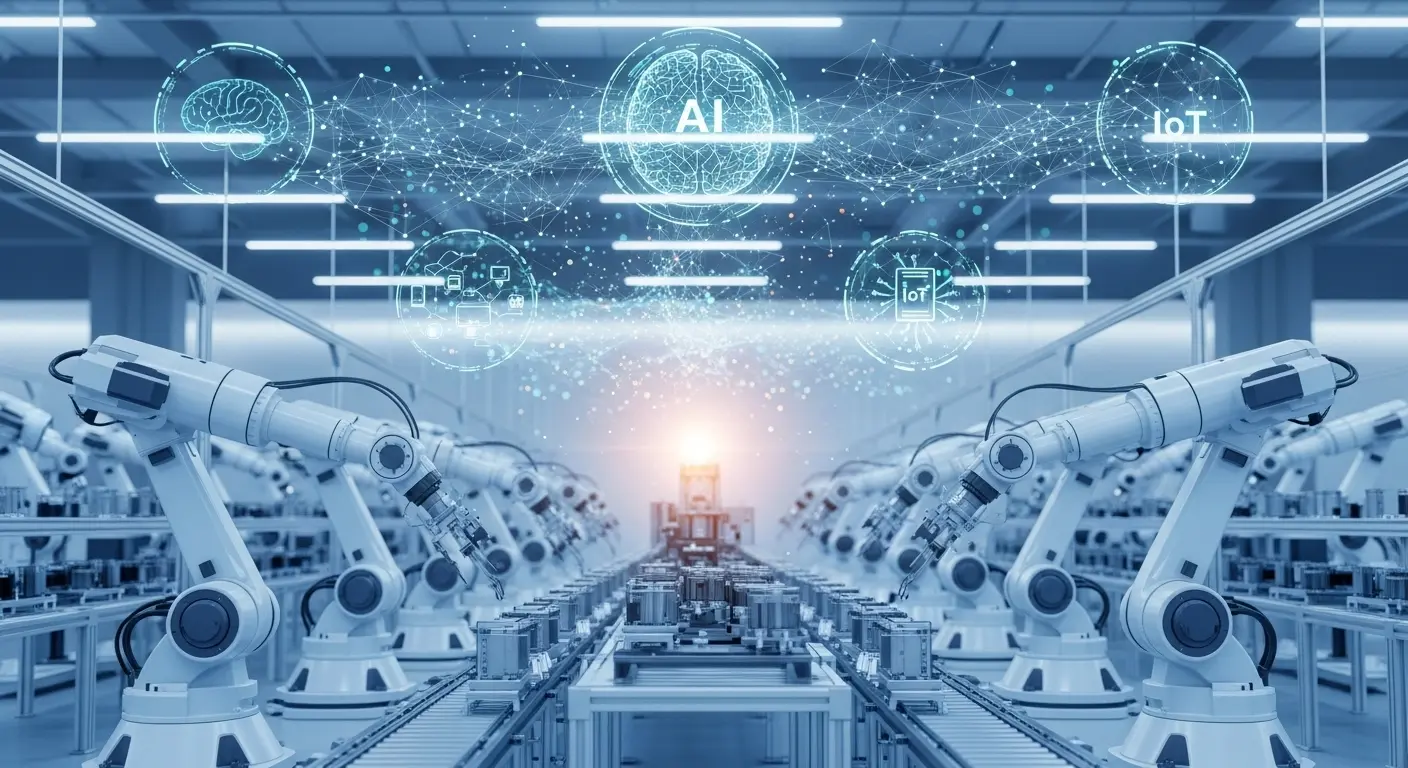
Indonesia's manufacturing industry is at a crucial turning point. Amidst increasingly fierce global competition, companies are being challenged not only to produce more, but also to produce faster, more precisely, and more efficiently.
Here it is AI and robotics is starting to play a significant role. This technology is no longer just a futuristic concept, but has become part of industrial transformation strategies in many countries.
However, in practice, many companies stop at the experimental stage. Many automation projects begin as pilot projects but struggle to develop into fully integrated systems within the production process.
Through this article, we share a simple overview of how AI and robotics can be implemented gradually and strategically in the Indonesian manufacturing industry., based on various implementation experiences in the technology and robotics sectors.
Why the Indonesian Manufacturing Industry Needs to Start Adopting AI Robotics
According to the data BPS 2023, the manufacturing sector contributes around 18,34% to Indonesia's GDP. This figure shows how significant the manufacturing industry's role is in the national economy.
However, on the other hand, manufacturing companies in Indonesia also face productivity challenges when compared to several countries in the Southeast Asian region, such as Vietnam and Thailand.
One approach that is starting to be widely implemented globally is the use of:
-
Collaborative robots (cobots) to help with repetitive work
-
AI vision systems to improve the accuracy of quality inspections
-
automation of production processes integrated with the company's digital system
The goal is not to replace humans, however support the production team to work more efficiently and consistently.
3 Phases of Effective AI Robotics Implementation
Technology transformation doesn't usually happen in one big step. A more realistic approach is to go through several measured implementation phases.
1. Assessment Phase
The first step is to understand the current operational conditions.
Companies need to conduct audits of their existing production processes, identifying the points that are most time-consuming, error-prone, or have the potential to be automated.
This approach helps ensure that technology investments are truly targeted at the areas that will have the greatest impact.
2. Pilot Phase
Once priority areas are identified, implementation can begin on a small scale.
Typically, companies select a single workstation or production process to test using robotics or AI technology. At this stage, clear performance indicators need to be established, such as increased output, reduced defects, or production time efficiency.
This approach allows companies to learn and adjust strategies before expanding further.
3. Scale Phase
If the pilot project shows positive results, the next step is to expand the implementation.
In this phase, robotics systems usually begin to be integrated with the company's operational platforms such as ERP or MES systems, so that production data can be directly connected to the company management system.
This integration opens up opportunities for deeper data analysis and faster decision-making.
Common Challenges in AI Robotics Implementation
Technological transformation always comes with challenges. Some of the most common ones include:
Workforce Adaptation
Technological change often raises concerns that automation will replace human labor.
A more effective approach is to position robotics as work aids, not as a substitute for humans. Many companies are also starting to implement human resource programs. upskilling to help employees adapt to new technologies.
Integration with Legacy Systems
Many manufacturing companies still use operational systems that have been running for years.
In order for new technologies to be well integrated, technical approaches are often required such as middleware development or API-based integration, so that the old system and the new system can communicate with each other more flexibly.
Metrics that Need to be Monitored in Robotics Implementation
In industrial technology implementation, success is not only measured by system installation, but also by its impact on operations.
Some commonly used metrics include:
-
OEE (Overall Equipment Effectiveness) to measure engine efficiency
-
MTTR (Mean Time To Repair) to see the speed of handling the disturbance
-
Quality defect rate to monitor the level of production defects
-
Energy consumption per unit to see the efficiency of energy use
Monitoring these metrics helps companies ensure that technology investments are truly delivering added value.
Implementing AI and robotics in the manufacturing industry isn't just about adopting new technologies. More importantly, how these technologies fit into an overall business transformation strategy.
Successful companies usually start small, learn from the process, and then gradually develop more integrated systems.
With the right approach, AI and robotics can become an important foundation for improving the efficiency, production quality, and competitiveness of Indonesia's manufacturing industry in the future.
Case Preview: Ezra Robotics
Examples of the application of robotics technology can be seen in companies such as Ezra Robotics, which develops technology quadruped robot for various industrial and research needs.
In this project, PasBay helps to carry out Ezra Robotics website revamp so that complex technologies can be explained more clearly to a wider audience.
The approach taken includes development interactive product showcase, improving information structure, and improving website performance to make it faster and easier to access.